

Never Feel “Enough”? Self-Worth Strategies for High Achievers

Many high-achieving women feel like their accomplishments never add up to “enough.” This guide explains why the not enough voice sticks, and how to rebuild self-worth beyond productivity.
At night, when you’re replaying the day in your head, it can feel like you’re falling short. It doesn’t matter that you consistently hit your goals, answer every email, and show up for everyone in your life. That voice saying "not enough" or “you could be doing better or more” is not about your actual performance. It's about your self-worth.
If that sounds familiar, you're not alone. High achievers often struggle with internal pressure long before they realize it's tied to worth, not effort. This guide breaks down why that happens and what you can do about it.
If these patterns feel familiar and you are looking for support, self-esteem therapy for high-achieving women can help you interrupt them. But first, let's break down why this happens.
Why “Not Enough” Sticks
Moving Goalpost
As soon as you hit one milestone, your mind raises the bar. You never celebrate a win because you have already moved on to the next goal. This moving goalpost pattern is one of the most common ways perfectionism keeps high achievers trapped in the never-enough cycle.
Discounting Wins
Successes tend to get labeled as “luck” or “not a big deal.” You struggle to take ownership of your accomplishments and have a hard time believing in yourself.
Comparison Fog
It doesn’t matter what social media platform you prefer. Whether you are scrolling on TikTok or Instagram, other people’s highlight reels become your baseline for happiness and success.
People-Pleasing Tax
You always say yes even though your body says no. It’s much harder for you to set a boundary than to do the requested task. This pattern is especially common for women in male-dominated fields and leadership roles, where the pressure to prove yourself is constant.
Learn the psychology behind people-pleasing and why it’s so exhausting.
Micro-Tools to Interrupt the Loop
These simple exercises can help you step out of the self-doubt and pressure patterns that keep you stuck.
-
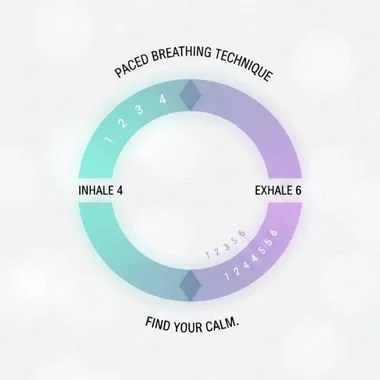
60–90 seconds of paced breathing (inhale 4, exhale 6) before you decide the next step.
-
Define two outcomes that equal “done for today.” When they’re done, you’re done.
-
List 3 actions you took that led to the result. (Not luck—actions.)
-
“Thanks for asking. I won’t be able to commit. Here’s what I can do…”
The Enoughness Audit: A Self-Check for High Achievers
Want a deeper tool to track your internal "enough" baseline? Download the free Enoughness Audit Below, a worksheet designed to help you reconnect with your worth beyond productivity.

Click for the Official Enoughness Audit
Preview: Sample Questions from the Audit
Here are 5 questions to get you started:
What is my definition of "good enough" for the important people in my life (e.g., a friend, sibling, spouse, grandparent, niece, child, etc.)? Is this the same definition I apply to myself?
What would it mean to feel “enough” today, even if I got nothing else done?
What external validation am I relying on to feel worthy?
Who or what am I constantly comparing myself to?
When was the last time I rested without guilt?
The full audit includes 10 reflective questions you can use as a journaling tool or weekly check-in to interrupt the "not enough" loop.
Ready to Build Confidence That Lasts?
If you're tired of the not enough cycle and ready to actually do something about it, working with a therapist who understands high-achieving women can help you get to what's driving it. Learn more about self-esteem therapy and whether it might be a good fit.
Related Reading
Imposter Syndrome and Self-Esteem: What's the Link — Because self-doubt and worth are more connected than most people realize
The Link Between Perfectionism and Anxiety in High-Achieving Women— Understand the loop and how to break it
High-Functioning Anxiety: Practical Tools & Support— If anxiety is the main driver behind your pressure and overthinking
[ + ] Disclaimer: Educational Use Only & Crisis Support #s
Educational use only:
The information, tools, and/or tips in this article are for educational purposes only. They’re not a diagnosis, a treatment plan, or medical advice, and they don’t establish a therapist–client relationship. Everyone’s history and nervous system are different. What helps one person may not fit another. If mental health is disrupting your work, sleep, or relationships, talk with a licensed clinician in your state.
Crisis Support:
If you are having a mental health crisis, please call 988 (U.S.), your local emergency number, or go to the nearest emergency room.
